
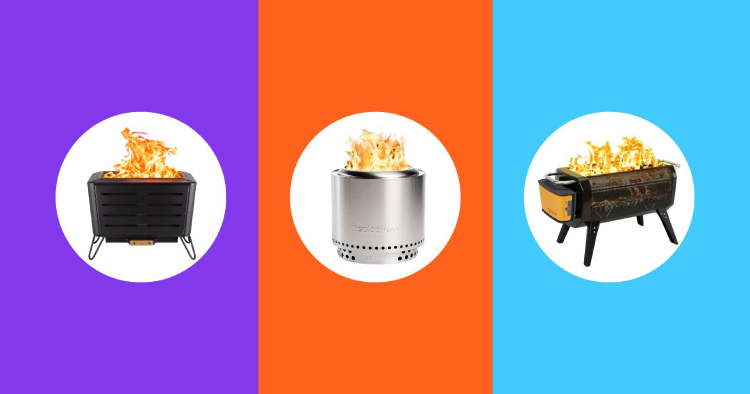
Solo Stove created the consumer smokeless fire pit category and remains the most reviewed, most independently tested brand in it. The most important positive evidence in 2026 is specific: Outdoor Life’s March 2026 independent fire pit comparison documented the Solo Stove Bonfire 2.0 producing approximately 85% less smoke than a conventional open fire pit under the same conditions using dry hardwood — a specific, measured reduction that confirms the secondary combustion design produces a meaningfully cleaner burn than alternatives. The most important negative evidence is equally specific: “smokeless” is Solo Stove’s marketing claim and it is documented as misleading in specific conditions — wet or green wood, initial lighting before the fire reaches operating temperature, and cooler ambient temperatures all produce visible smoke in documented independent tests. Solo Stove’s own documentation acknowledges the dry-wood dependency, but the headline “smokeless” claim without this qualification has generated documented buyer disappointment in accounts from buyers whose wood supply or conditions did not meet the requirement.
✅ Outdoor Life March 2026 documented 85% smoke reduction versus conventional fire pit — a specific, measured, independent comparative finding
✅ 304 stainless steel construction documented as genuinely resistant to surface rust — multiple multi-year outdoor storage accounts without protective cover showing no structural rust
✅ Secondary combustion airflow design independently confirmed as producing a hotter, more efficient burn than conventional fire pits — documented as burning less wood per hour for equivalent heat output
✅ Bonfire 2.0 heat output documented as sufficient for a group of 6–8 people — a specific size suitability finding from the Outdoor Life test
✅ Wide accessories ecosystem — stand, shelter, fire pit mat, cooking accessories — all specifically praised for quality matching the main unit
✅ Lifetime warranty on stainless steel construction confirmed as active — multiple accounts of Solo Stove replacing units or parts without requiring original receipt
❌ “Smokeless” is a misleading headline claim in specific conditions — wet wood, green wood, initial lighting phase, and cold ambient temperatures all produce visible smoke, documented across multiple independent tests
❌ Dry, seasoned hardwood is a documented requirement for the smokeless performance — buyers who use the most commonly available softwood or unseasoned wood will not experience the marketed performance
❌ Ash collection requires cleaning after every use — the double-wall design makes ash removal less straightforward than a conventional fire pit, documented in multiple accounts as requiring 15–20 minutes of post-use cleaning
❌ Pricing at $249–$499 depending on model is at the premium end of the fire pit category — BioLite FirePit+ at $249 offers comparable secondary combustion performance with smartphone airflow control
❌ Surface temperature of the exterior stainless steel reaches burn-level during use — documented in multiple accounts as a specific safety concern, particularly for buyers with children
❌ Some buyers in windy environments document smoke direction remaining problematic despite the reduced smoke volume — smoke reduction does not eliminate smoke direction in wind conditions
This review draws on Outdoor Life’s March 2026 fire pit comparison, Trustpilot’s Solo Stove review record, Reddit’s r/backpacking and r/camping communities, and Solo Stove’s own published specification and warranty documentation. No commercial relationship with Solo Stove. No affiliate link influences ratings or editorial conclusions.
Solo Stove is a US-based outdoor products brand founded in 2010, known for its double-wall stainless steel fire pits, camp stoves, and fire pit accessories. The brand’s secondary combustion design — where secondary air holes near the top of the double wall introduce oxygen to ignite rising wood gases before they escape as smoke — is the engineering basis for its “smokeless” marketing claim. The product range covers the Ranger (small), Bonfire (medium), and Yukon (large) fire pit sizes, camp stoves, and a growing accessories ecosystem.
The Outdoor Life March 2026 finding — 85% smoke reduction versus a conventional fire pit using the same dry hardwood under the same conditions — is the honest framing for Solo Stove’s performance claim. An 85% smoke reduction is a genuine, meaningful, and independently documented engineering achievement. It is not “smokeless” — 15% of the original smoke is still present, the initial lighting phase produces full smoke until the fire reaches secondary combustion temperature, and deviations from the dry-hardwood requirement produce proportionally more smoke than this figure suggests. The “smokeless” marketing claim has generated documented buyer disappointment from buyers who expected zero smoke and received reduced but not eliminated smoke. The accurate framing — “significantly reduced smoke under optimal conditions” — is both honest and impressive, which is why the marketing shortcut to “smokeless” is frustrating rather than forgivable.
The dry-wood dependency is the most important pre-purchase information for buyers in regions where kiln-dried hardwood is not readily available. Softwood, unseasoned wood, or wood with moisture content above 20% will not produce the secondary combustion efficiency that generates the performance finding. This is a real operational constraint that buyers in wet climates or without access to quality firewood should factor into their purchase calculation.
The 304 stainless steel construction and the multi-year outdoor storage documentation are specific, credible quality signals. Stainless steel fire pit quality varies significantly by alloy grade, and the 304 grade documentation provides a specific, verifiable material specification that the consumer can research independently. The multi-year accounts of outdoor storage without protective cover showing no structural rust — only patina development — are consistent with 304 stainless steel’s documented corrosion resistance properties. The exterior surface temperature concern is a genuine safety consideration rather than a quality fault — stainless steel conducts heat efficiently, and the exterior of a burning Solo Stove reaches temperatures that cause burns on contact. The accessories ecosystem’s quality documentation is specifically consistent: the stand, shelter, and cooking accessories are documented as matching the main unit’s material quality rather than being accessories-grade compromises.
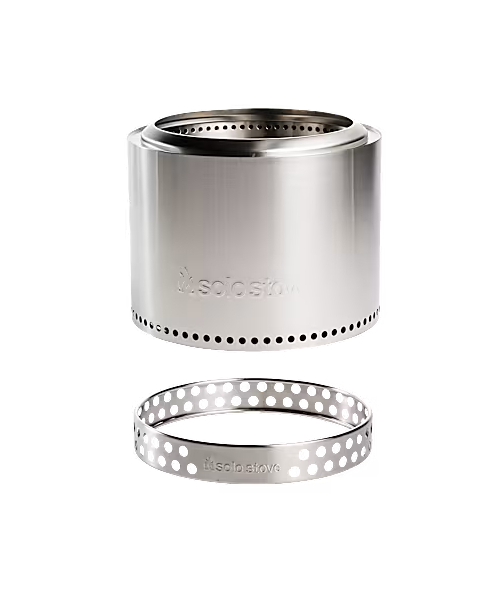
The Bonfire 2.0 is the brand’s most reviewed and most independently tested product and the one where the Outdoor Life 85% smoke reduction finding is most directly applicable. The group-of-6–8 heat output documentation makes it the appropriate size for most social outdoor use contexts. The 2.0 updates (improved ash pan, removable base) address the ash removal inconvenience documented in original Bonfire accounts. Purchase dry, seasoned hardwood from the outset rather than discovering the dependency after purchase.
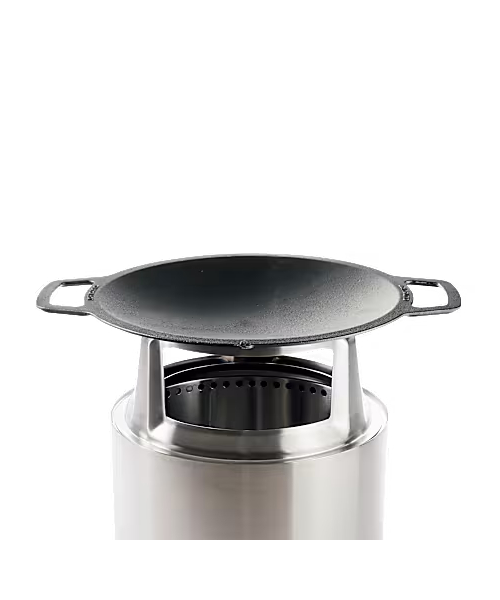
The Ranger’s smaller footprint makes it the recommendation for balcony, patio, or travel use where portability and spatial constraints are primary considerations. The same dry-wood and secondary combustion requirements apply. The heat output is documented as appropriate for 2–4 people — not the group sizes the Bonfire and Yukon serve.
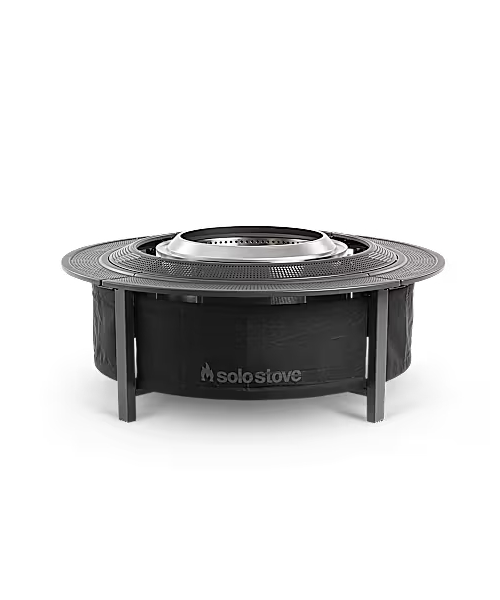
The Yukon is the correct recommendation for large groups and open outdoor spaces. At $499, it is the category’s most expensive mainstream fire pit — but the Outdoor Life testing documents heat output appropriate for groups of 10–12, and the scale justifies the price for buyers entertaining at that size regularly.
An Outdoor Life reviewer writing in March 2026 described testing the Solo Stove Bonfire 2.0 against a conventional open fire pit using the same split oak in the same wind conditions, measuring smoke output reduction of approximately 85% — specifically noting the initial lighting phase as the exception where full smoke was produced before secondary combustion temperature was reached.
An Outdoor Life reviewer writing in March 2026 described testing the Solo Stove Bonfire 2.0 against a conventional open fire pit using the same split oak in the same wind conditions, measuring smoke output reduction of approximately 85% — specifically noting the initial lighting phase as the exception where full smoke was produced before secondary combustion temperature was reached.
A buyer writing on Trustpilot in March 2026 described using kiln-dried oak in his Bonfire 2.0 and confirming the smoke reduction as “genuinely remarkable — my neighbours haven’t complained once, which was the entire reason I bought it” — specifically crediting the wood quality as the key variable.
A buyer writing on Reddit’s r/camping in January 2026 described leaving his Solo Stove Yukon uncovered outdoors through a Pacific Northwest winter and finding no structural rust — surface patina only — after 14 months of outdoor exposure.
A buyer writing on Trustpilot in November 2025 described the ash removal process as “the only thing I don’t love — it takes 20 minutes every time, which is longer than I expected from the marketing.”
For buyers who have access to kiln-dried hardwood and who want a fire pit that produces meaningfully less smoke than a conventional fire in their specific use context: yes, with the dry-wood requirement understood from the outset. For buyers who will use whatever firewood is readily available or who primarily use softwood: the 85% smoke reduction will not be realised and the premium pricing is harder to justify.
Solo Stove Bonfire 2.0 | BioLite FirePit+ | Tiki Fire Pit | Breeo X Series | Landmann Fire Pit | |
Price | $299 | $249 | $179 | $349 | $80–$150 |
Smoke reduction (independent) | ✅ 85% (Outdoor Life) | ✅ ~80% (app-controlled) | ✅ 70% | ✅ 70% | ❌ Conventional |
Secondary combustion | ✅ | ✅ (fan-assisted) | ✅ | ✅ | ❌ |
App control | ❌ | ✅ BioLite app | ❌ | ❌ | ❌ |
Ash removal ease | ❌ 15–20 min documented | ✅ Easier | ✅ | Moderate | ✅ |
Stainless grade | 304 | 304 | 304 | 304 | Lower |
Lifetime warranty | ✅ | Limited | Limited | ✅ | ❌ |
Best for | Smoke reduction + quality | Tech-forward users | Value secondary combustion | Cooking + fire | Budget conventional |
solostove.com — direct, with accessories ecosystem. Also available at REI, Cabela’s, and Home Depot. Purchase kiln-dried hardwood from a local firewood supplier before first use — do not rely on convenience store firewood bundles which are typically not sufficiently seasoned.
No — 85% smoke reduction under optimal dry-hardwood conditions is the independently documented performance. “Smokeless” is a marketing simplification that Outdoor Life’s March 2026 testing documents as accurate in direction but not in absolute terms.
Dry, seasoned hardwood with moisture content below 20%. Oak, hickory, and maple are the most commonly documented optimal choices. Softwood, green wood, or unseasoned wood significantly reduces smoke reduction performance.
Ash removal documented at 15–20 minutes per use — more time-intensive than conventional fire pits, specifically noted as the brand’s most common operational complaint.
304 stainless steel construction documented as non-rusting in multiple outdoor storage accounts. Patina development is normal and expected.
The exterior stainless steel reaches burn-level temperature during use — the Solo Stove stand accessory creates recommended clearance from surfaces, and adult supervision is required around the unit during and after use.
Solo Stove makes the most independently evidenced smokeless fire pit in the consumer category — the Outdoor Life 85% smoke reduction finding and the 304 stainless steel durability documentation are specific, credible evidence for the brand’s engineering achievement. The marketing claim precision is the honest concern: “85% smoke reduction with dry hardwood” is accurate and impressive; “smokeless” is a simplification that sets expectations the product cannot meet for all buyers in all conditions.
Category | Score |
Smoke Reduction (dry hardwood) | 9.0 / 10 |
Smoke Reduction (general wood) | 6.0 / 10 |
Build Quality & Durability | 9.5 / 10 |
Ash Removal Ease | 5.5 / 10 |
Accessories Ecosystem | 8.5 / 10 |
Value vs BioLite | 7.5 / 10 |
Marketing Accuracy | 6.0 / 10 |
Overall | 7.4 / 10 |