
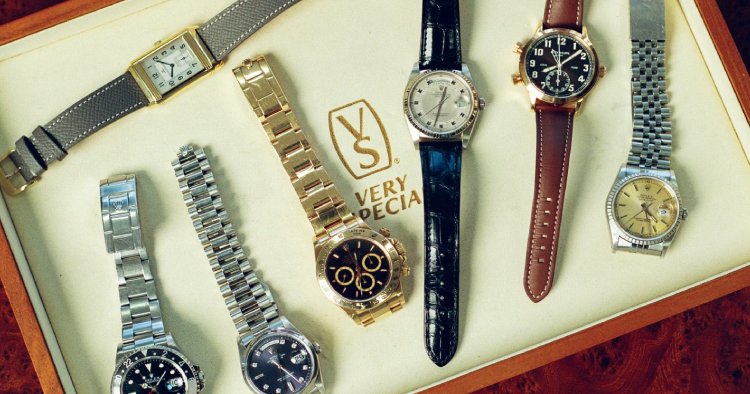
My grandmother wore the same watch for thirty years. A small gold thing with a leather strap that she’d been given as a gift when she got her first proper job. She had it serviced once, replaced the strap twice, and the watch outlived her. My aunt has it now and wears it regularly. That watch cost less than a mid-range laptop and is still functioning perfectly and still looks genuinely beautiful on a wrist.
That’s the standard I’ve started holding watches to. Not what looks good in a product photo or what’s getting attention this season, but what I’d still be happy to have on my wrist in twenty years. What would be worth maintaining, worth repairing if something goes wrong, worth passing on eventually. Watches are one of the few fashion purchases that can genuinely be intergenerational if you buy right, and most people don’t think about them that way because most watch content doesn’t frame it that way.
I started looking seriously at Shinola after reading about them for the third or fourth time over a couple of years. Detroit-based, founded in 2011, built around the idea of bringing watchmaking back to the United States. They’re not a Swiss manufacture and they don’t pretend to be — they assemble their watches in Detroit using movements sourced from established partners, which is how most watch brands at this price tier work. The case, dial, strap, and overall construction is done in-house and the quality is genuinely evident.
Available at shinola.com
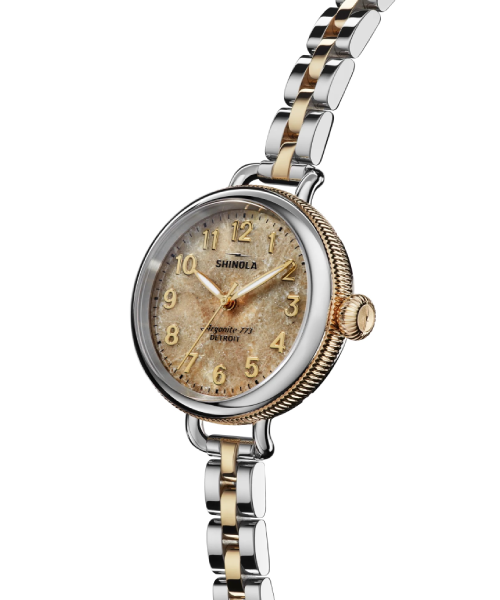
The Birdy was Shinola’s first women’s watch and the one they’re most associated with in the women’s category. It’s a small, refined timepiece — 28-34mm depending on the configuration — with a coin edge case detail that’s become a signature of the design. The dial is clean and uncluttered, the proportions are right for a range of wrist sizes, and it reads as a proper watch rather than a fashion accessory in the sense that it doesn’t trend date itself. Put it next to watches from five years ago and it looks like it belongs. Put it next to watches from five years from now and it will almost certainly look the same.
The Argonite movement inside is Shinola’s proprietary designation for the Swiss-made quartz movement they use across most of their collection. It keeps accurate time, requires battery replacement rather than winding or servicing every few years, and runs reliably for long periods without attention. Quartz is sometimes dismissed by watch enthusiasts who prefer mechanical movements, but for a daily-wear watch that you’re putting on every morning and wearing through a real day, quartz is genuinely practical. You don’t have to think about it. It’s just going to tell you the time accurately whenever you look.
The gold PVD version at $900 is the one I find most appealing — the warm tone works with almost every jewellery combination, the case is treated for durability so it’s more resistant to everyday scratching than standard plating, and it photographs well in the kind of natural light situations where you’re actually living your life. The stainless steel at $750 is more versatile for someone who mixes their metals or prefers a cooler tone, and the entry point $675 configuration is still the same watch with a slightly different case finish.
Shinola offers a limited lifetime warranty on most of their timepieces. That commitment means something for a purchase at this price level — it signals that the brand is confident enough in the construction to stand behind it for the life of the product.
Available at shinola.com
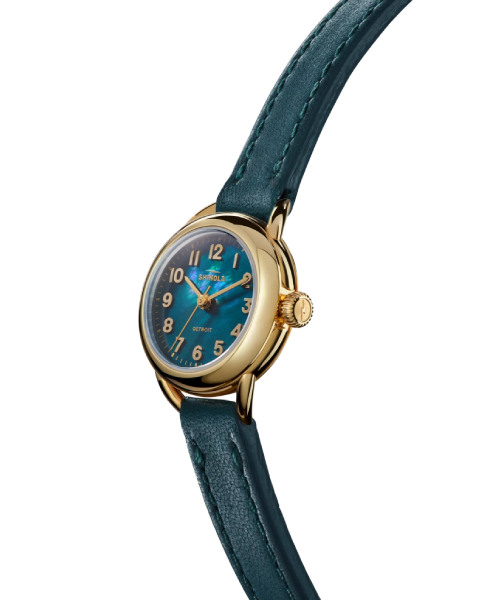
The Runabout is described by Shinola as a cocktail watch — delicate, slightly dressed-up, designed to complement jewellery rather than compete with it. It’s smaller than the Birdy, more refined in its proportions, and the design philosophy is specifically about versatility across formal and casual contexts. The idea of a cocktail watch sounds occasion-specific but in practice it means a watch with enough delicacy that it sits flat and comfortable under a cuff, doesn’t overwhelm a smaller wrist, and reads as elegant rather than sporty.
This is the one I’d suggest for someone who finds most women’s watches slightly too large for their wrist or who wants something that disappears into an outfit rather than drawing attention to itself. A watch that makes you feel better-dressed without anyone being able to immediately identify why is doing exactly the right job.
Available at shinola.com
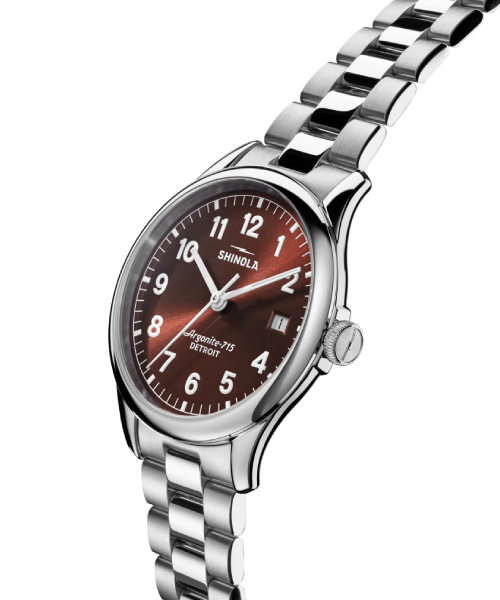
The Vinton is the more everyday option in the women’s line — clean dial, polished case, designed for daily wear without a specific occasion context. Shinola describes it as their refined everyday watch and that’s accurate. It doesn’t have the coin-edge detail of the Birdy or the cocktail-watch delicacy of the Runabout, but it has a clarity and directness in its design that makes it genuinely easy to live with.
A watch you grab every morning without thinking, that works with the gym bag in the morning and the dinner reservation in the evening, that doesn’t require you to make a decision about whether it’s appropriate for what you’re doing — that’s what the Vinton is. It’s not the most interesting watch in the collection but it might be the most useful one.
$595-$900 is a meaningful spend and I want to be honest about what you’re getting for that money at Shinola versus what you’d get from a fashion brand at the same price point.
At a fashion brand — a watch from DKNY, Michael Kors, Fossil — you’re primarily paying for the brand name and the aesthetic. The movement is typically a standard quartz from a mass-market supplier, the case materials are often plated stainless steel with thinner plating, and the construction isn’t designed to be serviced or repaired. When something goes wrong after the warranty period, replacement is usually more practical than repair. These watches aren’t built to last decades. They’re built to look good for a few years.
At Shinola you’re paying for something different. The construction is designed to be serviceable — Shinola has a repair and servicing program, and their warranty commitment suggests the watches are built with longevity in mind. The case materials are higher quality, the movements more carefully specified, the overall build more substantial. These are watches you can take to a jeweller for battery replacement and strap changes and light servicing over the years, the way you’d maintain any quality timepiece.
None of this means you need to spend $800 on a watch. But if you’re spending $300 on a fashion watch every three years because the previous one stopped performing, the math over ten years starts to look different.
Smartphones tell the time. Everybody knows that. So there’s a genuine question about whether wearing a watch in 2026 is functional or purely aesthetic, and I’d rather address it directly than pretend the question doesn’t exist.
For me it’s both and neither takes priority. I wear a watch because I like not having to take my phone out of my pocket or bag every time I want to know what time it is — the wrist glance is genuinely faster and more discreet in meetings and social situations. But I also wear a watch because a good watch on your wrist changes how your wrist looks and how an outfit sits. It adds something that a bare wrist doesn’t have. It’s a permanent accessory that you make one decision about in the morning and then don’t think about again for the rest of the day.
That’s what I mean when I say a good watch is low maintenance in a way that most other accessories aren’t. Earrings need choosing. Necklaces need layering or not layering. Rings need combinations. A watch just goes on and then it’s there, doing its job, wearing well, improving the overall picture quietly and consistently.
If I were choosing for myself right now: the Birdy in PVD gold. It’s the watch with the most character in the collection, the proportions suit my wrist, and the gold tone works with the jewellery I wear every day. It’s the one I’d be happiest with in five years and the one I’d most easily picture being serviced and worn in twenty.
If I were choosing for someone who doesn’t like drawing attention to their accessories or who prefers simplicity: the Vinton. No defining design details, just a clean honest watch that does its job.
If I were looking for something for a more occasional context — evening wear, events, something that works with dressier outfits: the Runabout. Its delicacy is an asset in those situations in a way that the Birdy or Vinton’s slightly more substantial cases aren’t.
All three are available on shinola.com with free shipping on orders over $125 and a 30-day return window. Shinola also has physical stores in several US cities if you’re the kind of person who wants to see and feel a watch before buying, which is a completely reasonable preference for a purchase at this level.
I’ve been paying attention to this for a while and the thing I’ve noticed is consistent: the people who seem most put-together in a low-effort way almost always have a watch on. Not an obviously expensive one necessarily — just a proper watch that fits their wrist and works with what they’re wearing. It’s one of those details that you can’t always identify but that registers somewhere as “this person has considered their appearance past the obvious things.”
That’s what a good watch does. It’s not the most dramatic fashion statement you’ll make. But it’s one of the few things you put on in the morning that’s still doing its job of making you look like you thought about getting dressed, thirty years from now.