
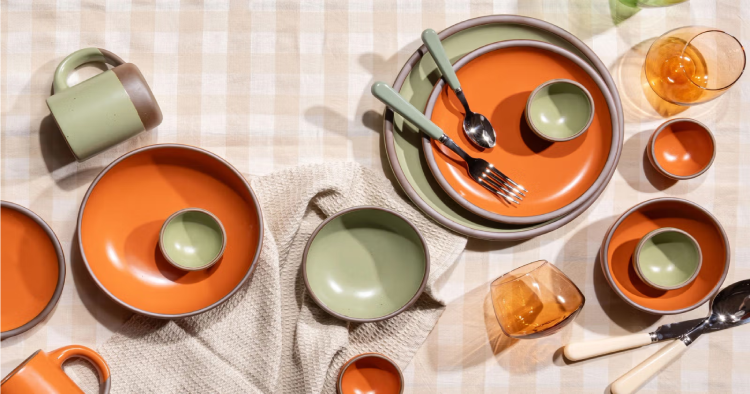
East Fork started on a former tobacco farm in North Carolina when co-founder Alex Matisse (a direct descendant of Henri Matisse) built a kiln and began throwing pottery. Today the Asheville-based brand produces around 650,000 pieces per year — all handmade, lead-free, and fired in North Carolina. The Kitchn called it “worth the price” in a 2026 review and the cult-status Mug regularly sells out within hours. The documented friction is scarcity: limited color drops, high sell-through rates, and occasional glaze batch variation across orders.
✅ Handmade in Asheville, North Carolina — genuine American craft manufacturing at scale, not imported pottery with a domestic label
✅ Certified B Corporation — independently verified ethical business practices covering worker wages, environmental standards, and community impact
✅ Lead-free stoneware confirmed — important for food safety and a point of clear differentiation from cheaper ceramic imports
✅ Microwave and dishwasher safe — actually designed for daily use, not just display
✅ Seven year-round core glazes plus rotating seasonal colors — build a mixed collection over time and pieces feel cohesive at the table
✅ The Mug has earned cult-status recognition and its own hashtag (#TheMug) — rare organic product credibility in the tableware category
✅ Living wages and benefits for all factory employees — pricing reflects real labor ethics, not exploitation passed off as “handmade”
✅ Physical stores in Asheville, Atlanta, and Brooklyn — you can actually see and touch before buying
✅ Strong resale value — retired colorways sell for multiples of retail on secondary markets
❌ Premium pricing — individual bowls up to $42, dinnerware sets up to $442 — genuinely expensive relative to DTC competitors
❌ Limited color drops sell out quickly — popular pieces and colors unavailable for extended periods
❌ Glaze batch variation means matching colors across separate orders isn’t always consistent
❌ Some pieces flagged as oversized for standard dishwasher racks — minor but real usability issue
❌ Seconds sales offer discounted imperfect pieces but flaws can be more noticeable than buyers expect
❌ Limited international shipping options — primarily accessible to US buyers
Research drawn from The Kitchn, Thingtesting, The Good Trade, and verified buyer accounts. No commercial relationship with East Fork.
East Fork uses locally sourced stoneware clay — the kind of specific material commitment that most brands skip. Every piece is handmade using industrial tools that allow for consistency at scale while preserving the tactile quality of studio pottery. The stoneware is dense, weighty, and satisfying to hold in a way that mass-produced ceramic simply isn’t. Glaze application is done by hand, which produces natural variation that most buyers find appealing and some find jarring when matching pieces across orders.
Long-term owners consistently report pieces surviving years of daily dishwasher and microwave use without chipping, fading, or losing their finish. The stoneware weight is on the heavier side — which adds to the premium feel but means small children need supervision. The plate sizing has been flagged occasionally as slightly oversized for compact dishwasher models, something worth measuring before committing to a full set.
This is East Fork’s real friction point. The brand’s popularity combined with its handmade production capacity means demand regularly outstrips supply. Core colors are generally available but popular seasonal drops and The Mug can disappear within an hour of restock. Physical stores in Asheville, Atlanta, and Brooklyn offer a better shopping experience than most DTC brands, but only for buyers in those markets.
At up to $442 for a dinnerware set, East Fork is priced at the top of the artisan DTC dinnerware market. The justification is real — American manufacturing, living wages, lead-free materials, B Corp certification, and proven durability. Whether that justification lands depends entirely on how much the ethical sourcing and craft provenance matter to the buyer versus pure price-per-plate comparison.
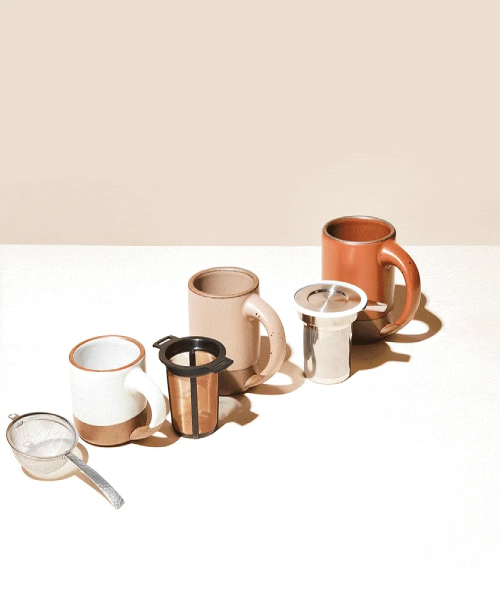
The product that built the brand. Weighted, balanced, comfortable handle, and sized for a real coffee pour. Cult-status online and genuinely deserving of it. Buy it on restock days — it sells out fast.
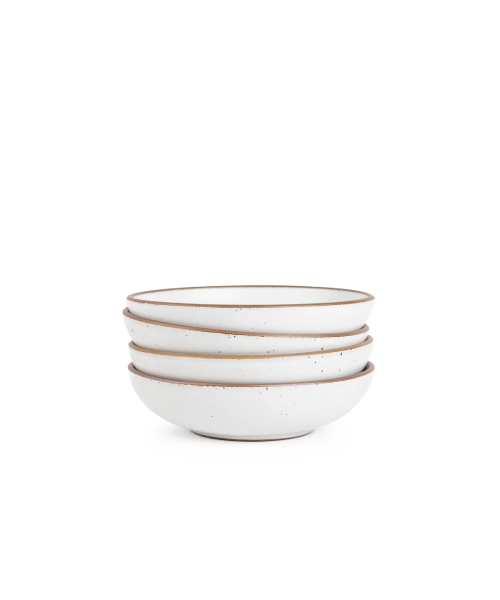
Deep enough for pasta, soup, grain bowls, or salads. One of the most versatile pieces in the catalog and consistently praised for its proportions and feel in the hand.
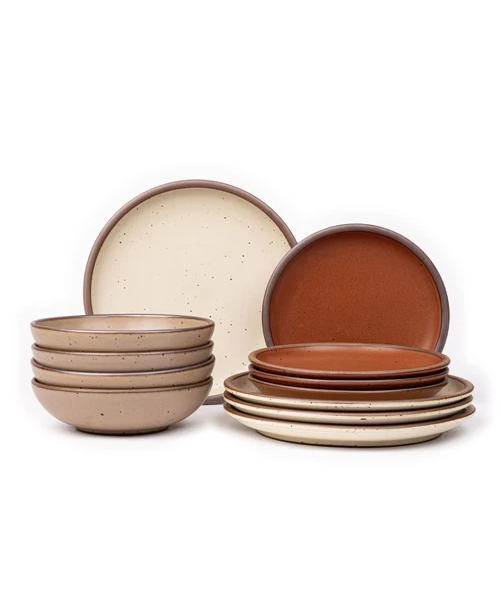
A wider, shallower bowl with a lip — functions as either a deep plate or a serving bowl. Multiple buyers list it as their most-reached-for piece in daily use.
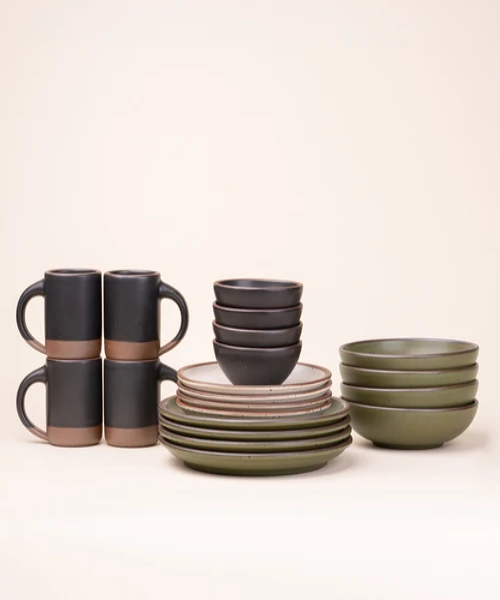
For buyers committed to the brand, the full set delivers the most cohesive aesthetic and the best per-piece value. Choose a core glaze for longevity — you’ll be able to match pieces for years.
“How can I say enough about East Fork Pottery? The quality, the craftsmanship, the usability? Yes, the prices are steep — but it’s worth it.” — Thingtesting verified buyer
“I put everything in the dishwasher every day and two years later they look brand new. Best investment I’ve made for my kitchen.” — The Good Trade commenter
“Ordered the same color twice and the glaze is noticeably different batch-to-batch. Slightly frustrating for a set that’s supposed to match.” — Thingtesting review
“The Mug sold out in under an hour. I refreshed the page at restock and watched 300 units disappear in real time.” — Reddit, r/EastForkPottery
“Even my Seconds pieces are beautiful. The ‘flaw’ on mine is barely visible — absolute steal at the discounted price.” — Verified buyer, East Fork website
Yes — for buyers who value American craftsmanship, ethical manufacturing, and heirloom-quality durability above price-per-piece. Not for buyers on a budget or those who need reliable, immediate availability.
Competitors Comparison:
Feature | East Fork | Year & Day | Fable | Our Place | CB2 | Heath Ceramics |
Origin | USA (NC) | Portugal | Europe | Asia | Various | USA (CA) |
Price (set) | $250–$442 | ~$176 | ~$175 | ~$165 | $150–$350 | $400–$600 |
B Corp Certified | Yes | No | No | No | No | No |
Lead-Free | Yes | Yes | Yes | Yes | Yes | Yes |
Physical Stores | Yes (3 locations) | No | No | No | Yes | Yes |
Dishwasher Safe | Yes | Yes | Yes | Yes | Yes | Yes |
For buyers who prioritize American manufacturing, lead-free materials, and long-term durability, yes. The Kitchn’s 2026 review confirmed the value holds over years of daily use.
Entirely in Asheville, North Carolina, using locally sourced stoneware clay.
Yes — all pieces are both microwave and dishwasher safe, designed explicitly for daily use rather than decorative display.
Handmade production limits volume. The brand produces roughly 650,000 pieces per year, which sounds like a lot until you factor in global demand for popular colorways.
Yes — flagship stores in Asheville, Atlanta, and Brooklyn allow you to see and handle pieces before purchasing.
Final Verdict:
East Fork is the rare brand where the story, the ethics, and the product all deliver in proportion to the price. The B Corp certification isn’t performative — it comes with living wages, health benefits for workers, and locally sourced materials. The pottery itself is genuinely beautiful in a way that photographs can’t fully capture, and durability that holds up over years earns the “investment piece” label rather than just using it as marketing language.
The access problem is real and worth acknowledging honestly. If you want a specific color or The Mug, you need to be ready to buy the moment it restocks — the brand’s popularity regularly exceeds its production capacity. And at $442 for a full set, East Fork is asking for a level of commitment that requires genuine conviction. But for buyers who have that conviction, the regret rate among long-term owners is remarkably low.
Scorecard:
Category | Score |
Craft & Materials | 9.5/10 |
Durability | 9.0/10 |
Design & Aesthetics | 9.0/10 |
Ethical Sourcing | 9.5/10 |
Value for Money | 7.0/10 |
Availability | 6.0/10 |
Glaze Consistency | 7.5/10 |
Shopping Experience | 7.5/10 |
Overall | 8.1/10 |