
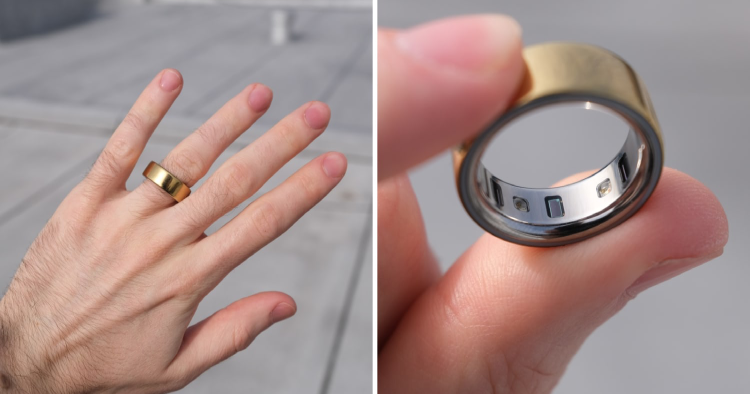
Oura Ring’s most specific documented strength comes from a 2025 peer-reviewed meta-analysis published in PMC that found “strong agreement with medical-grade sleep studies across multiple parameters” — polysomnography is the clinical gold standard for sleep assessment, and the Oura Ring’s agreement with PSG across multiple sleep parameters is documented in peer-reviewed science, not brand marketing. A four-month independent tester who wore the Ring daily documents becoming “officially a convert” — the Readiness Score consistently aligned with felt performance on training days versus recovery days, and the HRV measurement “genuinely changes how you plan training days.” The documented caveat: the $349 hardware price is only the beginning — full feature access requires a $5.99/month subscription (documented as what killed the deal for a Slickdeals community member), sleep stage accuracy is 55–72% (not clinical grade), and the ring is a genuine hindrance for hand-centric weightlifting, rowing, and similar workouts.
✅ 2025 peer-reviewed meta-analysis confirms strong agreement with polysomnography — published in PMC (June 2025), this systematic review and meta-analysis is the most credible available validation that the Oura Ring’s sleep tracking “may serve as a practical adjunct” to clinical sleep assessment. No other consumer sleep tracker has this level of clinical evidence published in peer-reviewed journals.
✅ Readiness Score changes daily training decisions — the documented independent tester experience: Readiness Scores below 70 “consistently lined up with sluggish workouts and foggy focus.” HRV measured overnight during deep sleep is “far more reliable than any daytime spot check on a smartwatch.” The Ring learns your individual baseline rather than comparing to generic averages.
✅ Worn by Jennifer Aniston, Gwyneth Paltrow, LeAnn Rimes, Prince Harry — celebrity adoption across wellness-focused public figures is documented across multiple independent editorial sources. For a health tracking device, celebrity adoption by publicly wellness-oriented figures is a relevant social endorsement.
✅ Water-resistant to 100 metres — safe for showers, swimming, and any water sport. No need to remove for any daily activity except hand-centric gym work.
✅ Gen 4 released October 2024 — improved sensors and longer battery life — the Gen 4 adds improved health monitoring sensors, refined body temperature tracking, and updated algorithms over Gen 3. The most current Oura hardware represents the best available sleep ring tracking at the price.
✅ Discreet and comfortable — no screen, no notifications — multiple independent testers document the Ring as the wearable that disappears from awareness most completely. No screen, no notification vibrations, no band sweat in summer. Just data, quietly collected overnight and presented each morning in the app.
✅ Skin temperature deviation detects illness early — multiple independent testers and published research document the Ring detecting elevated skin temperature deviation 1–2 days before subjective illness symptoms appear. For buyers who want early illness warning, this is documented as the Ring’s most surprising practical benefit.
✅ Seven-day battery life — the Gen 4’s battery lasts approximately 7 days between charges, requiring daily charging only once per week rather than the nightly charging required by Apple Watch.
✅ Used as evidence-based sleep tracking in multiple clinical studies — beyond the PMC meta-analysis, the Oura Ring has been used as the sleep tracking device in academic research studies across universities and medical institutions. This research use reflects scientific credibility beyond consumer product validation.
❌ $5.99/month subscription mandatory for full features — the hardware costs $349, but full feature access — detailed sleep staging, Readiness Score, HRV trends, cardiovascular age — requires a $5.99/month ($71.88/year) subscription. “Subscription need kills the deal” is the documented Slickdeals community response from a buyer who otherwise found the device appealing.
❌ 79% sleep/wake accuracy, 55–72% sleep stage accuracy — not clinical grade — the Ring’s sleep tracking is validated as the best available in consumer wearables but not as clinically accurate. 55–72% accuracy for sleep stage classification means the Ring misclassifies sleep stages in up to 45% of readings. The aggregate trend data is more valuable than any single night’s stage breakdown.
❌ Hindrance for hand-centric workouts — a Sleep Foundation tester who does weightlifting, rowing, and pull-ups documents the Ring as “far from bulky but still a hindrance” during hand-centric workouts, resulting in stopping wearing it during exercise and missing workout activity data. For buyers whose primary exercise involves gripping, the Ring is not the right workout tracker.
❌ Gen 4 finish scuffs easily — documented across independent reviews as a specific material limitation. The metallic finish on Gen 4 rings accumulates visible surface scuffs with normal daily wear faster than expected for a $349 product.
❌ First two weeks of tracking accuracy unreliable — baseline establishment takes 2 weeks before the Ring’s algorithms produce reliable personalised readings. During this period, the Sleep Foundation tester documents “a mixed bag in terms of tracking accuracy.” Buyers who expect immediate accurate data from day one will be disappointed.
This review draws on Sleep Foundation Oura Ring 4 expert-tested review (2025), Philip Metzger independent 4-month Oura Ring review (April 2026), PMC systematic review and meta-analysis on Oura Ring vs polysomnography (June 2025), TechRadar Oura Gen 3 review, AOL/independent Oura Ring 4 four-month tester documentation, and Slickdeals community buyer feedback. No affiliate relationship with Oura exists.
The PMC meta-analysis published in June 2025 is the most important fact about the Oura Ring that no other consumer sleep tracker can claim: peer-reviewed scientific literature confirms strong agreement with polysomnography across multiple sleep parameters. Every other sleep tracker on the market — Apple Watch, Garmin, Fitbit, Samsung Galaxy Ring — has proprietary algorithm claims without equivalent peer-reviewed clinical validation at this scale. This does not mean the Oura Ring is clinical-grade (it is not — 55–72% sleep stage accuracy versus PSG’s gold standard), but it means it is validated against the gold standard in a way that competitors cannot claim. For buyers who want the most scientifically supported consumer sleep tracker available, the Oura Ring is the documented answer.
The $5.99/month subscription is not optional in any meaningful sense — without it, the Ring’s core value propositions (Readiness Score, detailed sleep staging, HRV trends, temperature deviation tracking, cardiovascular age estimation) are inaccessible or severely limited. The full 5-year cost of ownership: $349 hardware + ($5.99 × 60 months subscription) = $708.40. For buyers who treat the Ring as a long-term health tracking investment — which is how the Ring is most valuably used — $708 over 5 years is the honest cost comparison to make, not $349. At $141.60/year, the Oura Ring is competitive with Apple Watch (which requires annual iPhone compatibility and full hardware replacement every 3–4 years) but more expensive than Garmin (no subscription, firmware updates free).
Oura Ring excels at: sleep stage tracking, HRV measurement, skin temperature deviation, Readiness Score synthesis, and passive resting heart rate. It is less suited for: active workout tracking during hand-centric exercise, step counting accuracy compared to dedicated GPS watches, and real-time exercise heart rate during any exercise where the ring is removed. Buyers who want a comprehensive fitness and sleep tracker should consider whether the Ring’s limitations for hand-centric gym work and step counting require a second wrist-based tracker to supplement. Buyers whose primary activity is running, swimming, cycling, or yoga — where the ring stays on without hindrance — will get the full Oura experience without this limitation.
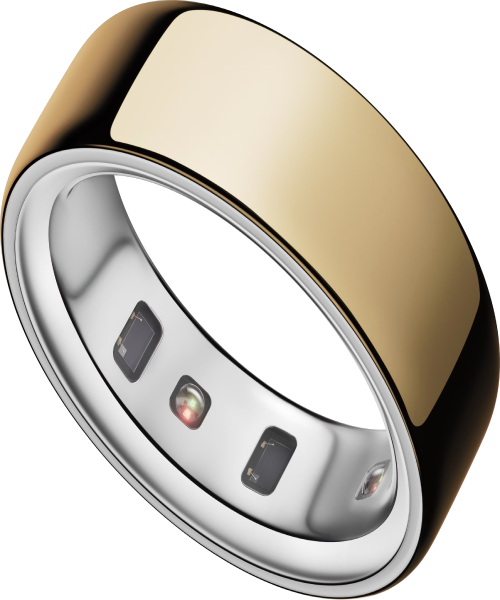
The current generation with improved sensors, longer battery life, and updated algorithms over Gen 3. Available in 5 colour options and sizes 6–13. The Gen 4 represents the best current Oura technology at the standard hardware price. Buy the Gen 4 over Gen 3 for the improved sensor accuracy. Wear the free sizing kit for 24 hours before ordering — Gen 4 sizing differs from Gen 3 and ring size matters significantly for sensor accuracy.
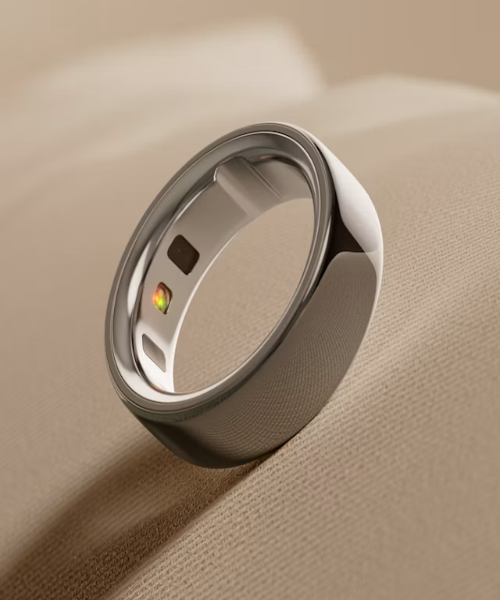
The rounder, less traditional ring style for buyers who want a more jewellery-adjacent look. Available in the same colour options and tracking capabilities as the standard Gen 4. The Horizon reads less like a fitness tracker at a glance — the right choice for buyers who wear the Ring in professional or formal settings where a tech device aesthetic is less appropriate.
“Once you start checking your Readiness Score each morning, it genuinely changes how you plan training days versus recovery days. Scores below 70 consistently lined up with sluggish workouts and foggy focus.” — Philip Metzger independent tester, 4-month documentation
“The Oura Ring, demonstrating strong agreement with medical-grade sleep studies across multiple parameters, may serve as a practical adjunct in ENT practice.” — PMC peer-reviewed meta-analysis, June 2025
“As far as step counters + sleep tracker, this is an amazing device. We have been using Oura for several years now and find them extremely accurate, not obtrusive and very comfortable to wear.” — Slickdeals community buyer
“Subscription need kills the deal.” — Slickdeals community member
“After the first two weeks, I noticed more consistency [in tracking accuracy]. Oura Ring was still a hindrance during weightlifting — I eventually stopped wearing it when I exercised.” — Sleep Foundation expert tester
Buy the Oura Ring Gen 4 if you prioritise sleep quality tracking over workout tracking, you are willing to wear the Ring 24/7 including sleep, you can justify $349 + $5.99/month as a health investment, and your primary exercise doesn’t involve hand-centric gripping. The PMC clinical validation makes it the most scientifically supported consumer sleep tracker available.
Do not buy the Oura Ring if your budget can’t accommodate the subscription, your primary exercise involves weightlifting or rowing where the ring becomes a workout hindrance, or you want real-time fitness data during exercise — a Garmin or Apple Watch is a more complete athletic device.
Oura Ring vs Competitors
Feature | Oura Ring 4 | Apple Watch Ultra | Garmin Fenix 8 | Samsung Galaxy Ring | Whoop 4.0 | Fitbit Sense 2 |
Price | $349 + $5.99/mo | $799 | $799–$999 | $399 | $239/yr subscription | $299 |
Sleep Tracking | ✅ Best in class | ✅ Good | ✅ Good | ✅ Good | ✅ Strong | ✅ Good |
PSG Clinical Validation | ✅ Peer-reviewed 2025 | ❌ | ❌ | ❌ | ❌ | ❌ |
Subscription | ⚠️ $5.99/mo | ❌ (Fitness+ optional) | ❌ | ❌ | ✅ Required | ❌ |
Battery Life | ✅ 7 days | ❌ 18–36 hours | ✅ 16+ days | ✅ 7 days | ✅ 4–5 days | ✅ 6 days |
Workout Tracking | ⚠️ Problematic (hand-grip) | ✅ Excellent | ✅ Excellent | ⚠️ Limited | ✅ Good | ✅ Good |
Discretion | ✅ No screen | ❌ Visible | ❌ Visible | ✅ Ring | ✅ Strap | ❌ Visible |
5-Year Total Cost | $708 | $800+ (2 replacements) | $799 | $399 | $1,195 | $299 |
1. Is the Oura Ring Gen 4 worth $349?
For sleep-priority buyers — yes, based on the most specific available clinical validation (PMC 2025 meta-analysis) and documented long-term user satisfaction. The honest cost is $349 hardware + $71.88/year subscription = $708 over 5 years. For workout-priority buyers — a Garmin or Apple Watch delivers better active exercise tracking at comparable 5-year cost.
2. Do you have to pay a subscription for Oura Ring?
Yes — $5.99/month ($71.88/year) for full feature access including the Readiness Score, detailed sleep staging, HRV trends, and health insights. Basic biometric data is accessible without a subscription, but the core value propositions require paid membership. Budget the full 5-year cost ($708) rather than the hardware price ($349) for an honest purchase decision.
3. Is the Oura Ring accurate for sleep tracking?
The most accurate available in consumer wearables, validated against polysomnography in a 2025 peer-reviewed meta-analysis. The specifics: 79% sleep/wake accuracy, 55–72% sleep stage accuracy. Not clinical grade — but the best available consumer option with published clinical validation. Trend data across multiple nights is more valuable than any single night’s sleep stage breakdown.
4. Is Oura Ring good for weightlifting?
No — the Sleep Foundation expert tester documents the ring as a hindrance during weightlifting, rowing, and pull-ups, eventually stopping wearing it during exercise. For buyers whose primary activity is hand-centric gym work, the Ring misses the workout data that makes a sleep tracker most valuable (correlating workout intensity with recovery quality). Consider pairing with a wrist-based workout tracker for active exercise.
5. What size Oura Ring should I buy?
Wear the free plastic sizing kit Oura provides for 24 full hours before ordering your ring size — ring sizing changes throughout the day (fingers swell in heat, contract in cold) and the Gen 4 sizes differently from Gen 3. Getting the size wrong means returning the ring for exchange, and the sensor accuracy depends on a snug fit on your index or middle finger.
Final Verdict
The Oura Ring Gen 4 is the most clinically validated consumer sleep tracker available — the 2025 peer-reviewed meta-analysis confirming strong agreement with polysomnography is a credential that no Apple Watch, Garmin, or Samsung Galaxy Ring can cite. For buyers who prioritise sleep quality tracking above workout tracking, the Ring’s overnight HRV measurement, skin temperature deviation, Readiness Score synthesis, and 7-day battery life combine into the most comprehensive passive health monitoring available in a form factor that disappears from daily awareness.
The subscription ($5.99/month), the 2-week baseline establishment period, the surface scuffing, and the weightlifting hindrance are all real limitations that require active management and honest assessment before purchase. Buy the Oura Ring Gen 4 as a sleep and recovery investment; supplement with a wrist-based device if serious athletic tracking is also needed.
Scorecard
Category | Score |
Sleep Tracking Accuracy | 9.0/10 |
Clinical Validation (PSG) | 10/10 |
HRV & Readiness Score | 9.5/10 |
Comfort & Discretion | 9.5/10 |
Battery Life | 8.5/10 |
Workout Tracking (Hand-Grip) | 3.5/10 |
Subscription Value | 6.5/10 |
Hardware Durability (Scuff) | 6.5/10 |
Overall | 7.9/10 |