

I am the kind of person who burns in fifteen minutes in direct sun, spent years doing the sunscreen-every-two-hours routine, and still managed to come home from outdoor days looking like I’d spent the afternoon on a grill. The problem wasn’t that I wasn’t applying sunscreen — I was, obsessively. The problem is that sunscreen wears off, gets sweated off, gets forgotten after the first application, and only protects the skin that’s actually exposed to it.
The conversation I had with a dermatologist a couple of years ago changed how I thought about this. She told me that UPF clothing — fabric with an ultraviolet protection factor built into the weave — is consistently more reliable than sunscreen for people who spend significant time outdoors because it doesn’t wear off, doesn’t need reapplying, and covers the areas where people most consistently miss or skip sunscreen. She wasn’t suggesting I stop wearing sunscreen. She was suggesting I layer it with clothing that does some of the work consistently.
I started looking at UPF brands after that appointment and kept coming back to Beneunder. They’re a specialist brand — this is what they make, it’s not a side category for them — and the range is wide enough that I found things I’d actually want to wear rather than things that look like safety equipment.
Available at beneunder.com
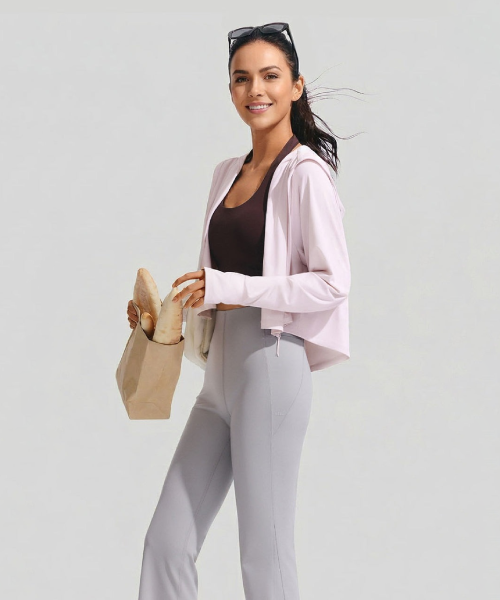
This is the one I reach for most often. It’s a cape-style sun jacket — slightly loose through the shoulders, cropped at the hip — with a built-in attached hood that has a 12.5cm brim for face and neck coverage. The Airloop 3.0 Cloud Yarn fabric they use blocks at least 99.7% of UV rays from every angle, which holds up after repeated washing and stays effective when the fabric gets wet from sweat, which is the specific failure point of chemical sunscreen that I was trying to get around.
The cooling technology is the part I was most sceptical about before trying it. The claim is that the fabric actively reduces skin surface temperature rather than just letting heat through. In practice the jacket is noticeably cooler to wear in direct sun than most fabrics — I can’t give you a physics explanation for exactly why, but the subjective experience of wearing it is that I’m less hot than I’d expect to be in a long-sleeved jacket on a summer day. It’s available in gray, pink, ivory, purple, and blue at current time.
At $65 this is the kind of thing I’d suggest buying before the first outdoor event of the season and then reaching for every time there’s prolonged sun exposure — hiking, days at outdoor festivals, beach days, gardening, anything where you’re outside for more than an hour.
Available at beneunder.com
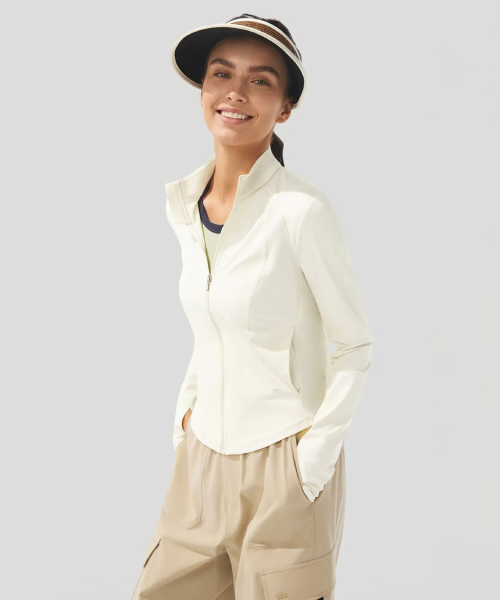
The AL819 is a different silhouette from the AL118 — it’s slim-fit with a stand collar rather than cape-style with a hood, and it reads as slightly more put-together, like something you’d wear for a commute or a casual day out rather than specifically an outdoor activity. The collar coverage means you don’t necessarily need the separate face mask if your main concern is neck and chest protection.
This is the one I wear on city days — coffee, errands, a day out when I know there’ll be a lot of walking in direct sun. It doesn’t read as obviously UV-protective the way more technical pieces sometimes do. It just reads as a lightweight fitted jacket in a clean silhouette, which is why it works for more situations. Available in white, black, gray, blue, purple, coffee, and yellow — the gray and white are the most versatile for mixing with existing wardrobe.
Available at beneunder.com
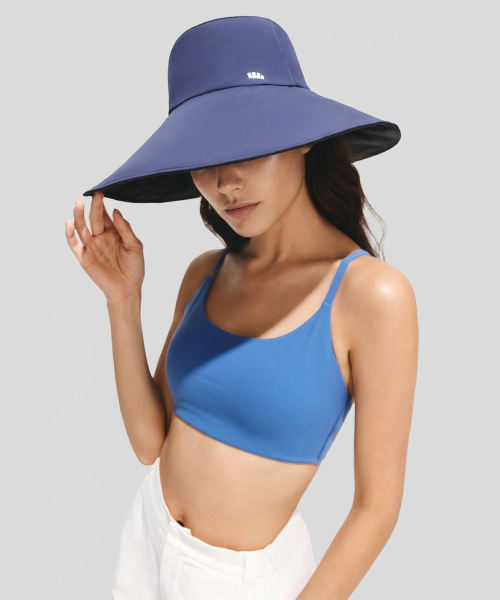
The hat is the piece I resisted buying longest and the one I now wish I’d bought sooner. It’s a wide-brim fisherman style — bucket hat proportions but with a wider brim that covers the ears and the back of the neck — and it’s reversible, which means two different colorways in one hat. The light gray, pink, navy blue, and beige options are all currently available.
I was resistant because I thought a wide-brim sun hat would look specific in a way that only works for outdoor activities. It doesn’t. I’ve worn this on regular city days, on beach trips, on hiking days, and it works across all of them without looking like I’m dressed for one specific activity. The wide brim does meaningful work for protecting the face and neck in a way that a standard cap doesn’t — when I wear this I can feel the difference in how much direct sun is hitting my face after an hour outside.
UPF stands for Ultraviolet Protection Factor, and it’s the fabric equivalent of SPF. Where SPF measures how much UV radiation passes through sunscreen to reach your skin, UPF measures how much UV radiation passes through fabric to reach your skin. UPF 50 means only 1/50th of UV radiation passes through — a 98% block. UPF 100+ means less than 1% passes through.
The distinction that matters practically: sunscreen has to be applied correctly to every exposed area, reapplied every one to two hours, and reapplied after swimming or heavy sweating. UPF clothing doesn’t require any of that. You put it on and the protection works consistently for as long as you’re wearing it. For the areas it covers — arms, shoulders, back, chest depending on the garment — it provides more consistent protection over a full day outdoors than sunscreen alone.
This doesn’t replace sunscreen for exposed skin — your face, neck where the clothing doesn’t cover, hands. It supplements it. But covering the large surface areas with UPF clothing and applying sunscreen to smaller exposed areas is genuinely easier to maintain correctly than covering everything with sunscreen and trying to remember to reapply.
I want to address the cooling claims specifically because I was genuinely sceptical and I know other people will be too.
The science behind cooling fabrics is real — there are different mechanisms different brands use, including moisture-wicking that accelerates evaporative cooling, hollow or structured fibers that create air pockets between the fabric and skin, and specific weave patterns that allow airflow. The result varies by product and by conditions, but the better UPF jackets do feel cooler than the alternative of either wearing no jacket and having direct sun on skin, or wearing a regular lightweight jacket that doesn’t have active cooling properties.
What I can tell you from wearing the AL118 specifically is that on genuinely hot days — high thirties, direct sun, humidity — the jacket is uncomfortable in the way any long-sleeved garment is uncomfortable in that heat, but it’s less uncomfortable than I expected and significantly less uncomfortable than being in direct sun without coverage. The cooling effect is real but it’s not magic. You will still be warmer than if you were in the shade in a tank top. You will be protected in a way that matters for skin health.
Beneunder sizing runs true to international sizing but slightly on the larger side of standard — the cape-style jackets especially have a relaxed fit that accommodates a wide range of body shapes without adjusting. The slim-fit AL819 runs more precisely to size and I’d recommend checking their size chart rather than assuming your standard size, especially if you’re between sizes.
The hats are one-size-adjustable for most styles and the adjustment mechanism is reliable. If you have a particularly large or small head it’s worth checking the specific hat dimensions on the product page.
Free shipping is included worldwide and the return window is thirty days, which is enough time to test the pieces across a few outdoor days before committing. The return process is straightforward through their site.
The mental shift that made this work for me was stopping thinking of UPF clothing as specialized outdoor gear and starting thinking of it as a layer — like carrying a cardigan for air conditioning. The AL819 jacket in particular lives in my bag during summer the way a light cardigan would in winter. I put it on when I’m going to be in direct sun for more than twenty minutes. I take it off when I’m inside or in shade.
The hat took longer to integrate but I’ve got to the point where I take it on any outdoor day longer than an hour without thinking about it. The wide brim isn’t conspicuous in the way I worried it would be — plenty of people wear wide-brim hats in summer and the Beneunder styles are considered enough to look like a deliberate choice rather than a sun-avoidance panic response.
The result of about a year of wearing this combination is that I’ve stopped dreading outdoor days in terms of skin protection. The sunscreen is still there for exposed areas. The UPF clothing handles everything it covers. The anxiety about whether I’ve applied enough, whether I need to reapply, whether I missed a spot — that’s largely gone. That’s worth the $55-65 per piece, easily.